The Desmos product line continues to expand. Remember, these are all free apps. Their current offerings include:
- their original graphing calculator
- their original scientific calculator
- a nice little four-function calculator
- a practice page, to help you prepare to use these calculators in a test or exam
- a matrix calculator
- a clever and intuitive geometry tool
- a new 3D calculator
The Desmos 3D calculator is an exciting new product! As of this update, the 3D calculator is still in Beta. But it is as intuitive as their original offerings. I typed in three equations: x = cos theta, y = sin theta, and z = theta, and the calculator plotted a nice spiral surface for me. No RTFM necessary. It just works!
Thomas Okken, the creator of Free42, has added another project to his page. Plus42 is an enhanced version of Free42. It's a paid app on Android and iOS, but is free for Mac, Windows, and Linux PCs. Please support his efforts by giving him money, one way or another.
The SwissMicros DM42, which runs Free42, is still being built and sold, and actively supported, and getting rave reviews online. I still want one.
In fact, the hardware and OS of the DM42 are so good, that it has proven to be infinitely customizable. The DM42 hardware serves as the host platform for other, new, open source calculators, such as the WP43, the C47, and the DB48X (yes, that's a "48"). These developments may deserve their own super-nerdy blog entry here on Zyzmog Galactic HQ. At the very least, in lieu of that blog entry, click on the links above and read about them for yourself.
The HP-12C (the Calculator that Refuses To Die) is still selling. Wikipedia calls it "HP's longest and best-selling product." HP has upgraded the HP-12C's innards several times now, so it keeps getting better and better. Other than the 12C, HP's calculator line is basically defunct.
TI continues to sell their ancient and overpriced TI-84 series to a captive market, but I think that their influence is finally waning, thanks to Desmos and others. TI doesn't appear to be pouring any more software engineering effort into improving their cash cow / golden goose. Let us wish TI a speedy march into oblivion.
UPDATE, 18 JUL 2022:
This is still one of the most widely read articles on my blog. That's gratifying. I'm glad to see that it is so useful to so many people.
The SwissMicros version of the HP42 drifts in and out of stock, as do the rest of the SwissMicros calculator product line. Don't let that worry you. It's merely a sign of the craftsmanship with which these beauties are built. (p.s. I want one.)
The Desmos calculators continue to march ahead. More power to them, I say, and to Eli Luberoff and his company. I hope that they make tons of money. Don't worry; their calculators are still free to you, and always will be.
And a final bit of good news: Free42 is not only alive and kicking after 15 years, but it is thriving! It is still in active development. The latest version was released a little over a month ago, in February 2020. If you have followed my recommendation and downloaded this little jewel, consider helping out by clicking on the Donate link on the Free42 webpage and sending Thomas a little cash.
UPDATE, 3 OCT 2019:
There's a Swiss company, SwissMicros, which makes absolutely beautiful replicas of some of the greatest HP calculators: the 10, 11, 12, 15, 16, 41, and 42. Yes, the 42.
There's a new game in town, and it makes the HP and TI calculators as obsolete as dinosaurs. Read this blog article about Desmos.
UPDATE, 27 SEP 2019:
This is one of the most widely read articles on my blog. It's good information. Since Apple did some housekeeping on their App Store, some of the picture links are broken. I've replaced them with local pictures.
In addition, Graphix48 has disappeared from the App Store. I wish I'd saved a local picture of it, because it was good. The developer's web page has also disappeared.
NOW, FOR THE ORIGINAL ARTICLE, 28 OCTOBER 2013:
The first pocket-sized scientific calculator in the world was the HP-35, invented by Hewlett Packard and introduced to the world in 1972. HP literally created the market for handheld scientific calculators. Although many worthy competitors arose, none could match HP's quality, reliability and overall superior design. HP was king of the mountain until Carly Fiorina chose to pull the plug on the calculator division sometimein the 1990s around 1999, and ceded the entire market to Texas Instruments.
Carly's excuse at the time was that "calculators are not profitable," which was an outright lie. We won't get into that here. That's water under the bridge. The geniuses who invented such dominant creatures as the HP-12C (the financial calculator that refuses to die), the HP-41 series and the HP-48 series, have moved on to other careers. So has Carly. Around HP, some people still spit after they say her name.
HP calculators have a vast and loyal fan base around the world. Some of those fans were later hired by HP to revive the calculator division, but it was too little, too late, and HP has never reclaimed the market. Like I said, that's a topic for another time, and besides, whining about it won't bring back the glory days.
One of the wisest things HP did, after announcing the dissolution of their calculator division, was release their ROMs into the wild. You can find ROM images, and maybe even source code, for many of HP's calculators online. I believe you can even find source code and emulators for the Saturn and other 4-bit CPUs at the heart of the calculators. (No, I won't include links. Go sniffing for them if you want them.)
Thanks to this wise and generous move by some key players inside HP (see the note at the end), their calculators live on. You can now have an HP calculator app on your iOS or Android device. These emulators work as well as the real things, including support for external storage and printers (on some apps).
My (free) recommendations for iOS: i48 ( two different views)and Graphix48 (right).


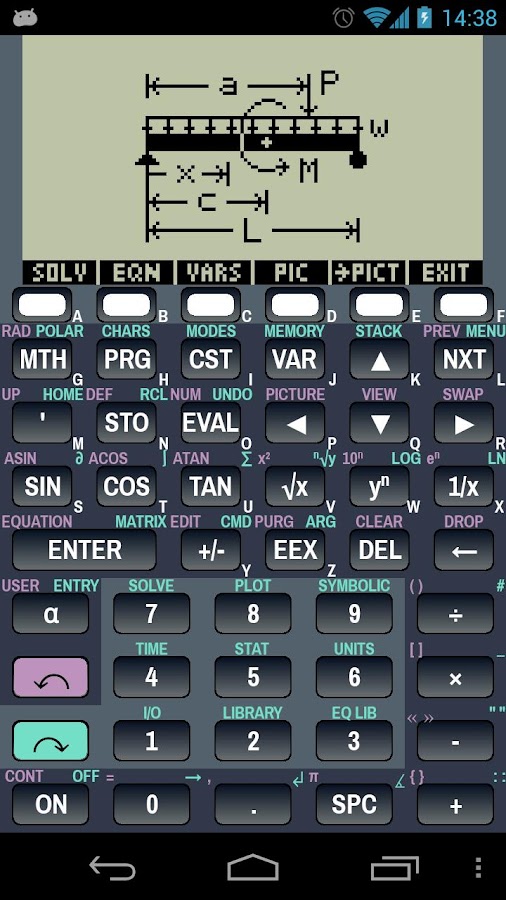
My (free) recommendations for Android: Droid48 (left) came first. Droid48sx (right) is a beautiful follow-on product.
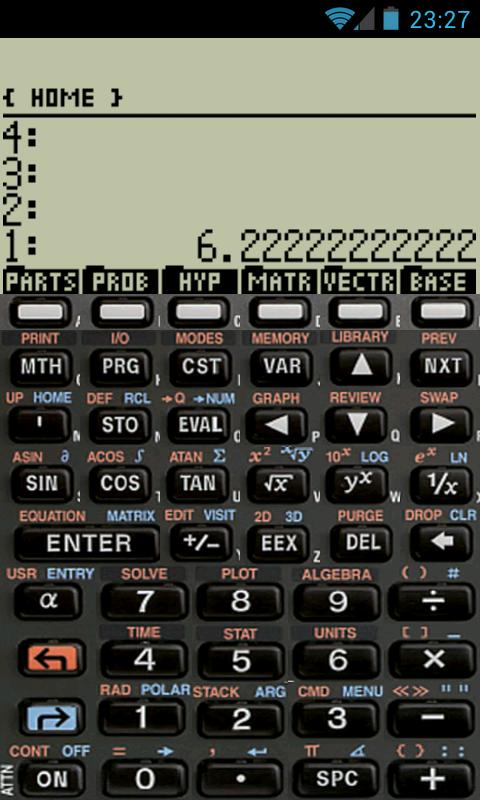
go48g is a really sweet alternative to Droid48. And if you're an HP-41 fan, go41c is a beautiful (and free!) HP-41 emulator.


On iOS, youcan also buy i41cx, an HP-41CX emulator.

Once you've made the leap from free calculators to ones you actually spend money on, your whole world opens up. You can get expandable versions of the HP48 and HP41 series. You can get the HP-12c and all of its sideways brethren. And you can get my personal favorite, possibly the best overall scientific calculator HP ever made, the HP-42S. What? You've never heard of the 42S? Well, that's another story for another time.
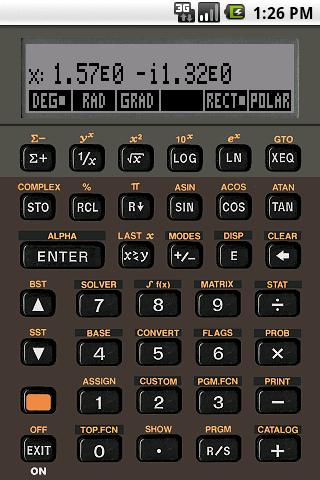
Wait! Don't spend your money yet! Here's an open-source version of the HP-42S emulator! It doesn't use a single bit of HP's ROM images; it merely duplicates the functionality. (Merely? That's a lot of mere.) For iOS (left) and Android (right).

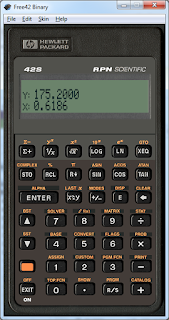
Free42 is also available for Windows, Mac, and Linux operating systems.
A note about those "key players": The HPers who released all of this code into the wild were not the movers and shakers at the top, who nearly drove this once-great company into the ground. They were a tiny number of HP engineers and engineering managers with a combination of passion, integrity and vision that is seldom seen inside HP anymore. I don't know whether they did it with the executive suite's blessing or not, but either way it was a bold move on the part of the engineers and the engineering managers, for which we thank them.
This is still one of the most widely read articles on my blog. That's gratifying. I'm glad to see that it is so useful to so many people.
The SwissMicros version of the HP42 drifts in and out of stock, as do the rest of the SwissMicros calculator product line. Don't let that worry you. It's merely a sign of the craftsmanship with which these beauties are built. (p.s. I want one.)
The Desmos calculators continue to march ahead. More power to them, I say, and to Eli Luberoff and his company. I hope that they make tons of money. Don't worry; their calculators are still free to you, and always will be.
And a final bit of good news: Free42 is not only alive and kicking after 15 years, but it is thriving! It is still in active development. The latest version was released a little over a month ago, in February 2020. If you have followed my recommendation and downloaded this little jewel, consider helping out by clicking on the Donate link on the Free42 webpage and sending Thomas a little cash.
UPDATE, 3 OCT 2019:
There's a Swiss company, SwissMicros, which makes absolutely beautiful replicas of some of the greatest HP calculators: the 10, 11, 12, 15, 16, 41, and 42. Yes, the 42.
There's a new game in town, and it makes the HP and TI calculators as obsolete as dinosaurs. Read this blog article about Desmos.
UPDATE, 27 SEP 2019:
This is one of the most widely read articles on my blog. It's good information. Since Apple did some housekeeping on their App Store, some of the picture links are broken. I've replaced them with local pictures.
In addition, Graphix48 has disappeared from the App Store. I wish I'd saved a local picture of it, because it was good. The developer's web page has also disappeared.
NOW, FOR THE ORIGINAL ARTICLE, 28 OCTOBER 2013:
The first pocket-sized scientific calculator in the world was the HP-35, invented by Hewlett Packard and introduced to the world in 1972. HP literally created the market for handheld scientific calculators. Although many worthy competitors arose, none could match HP's quality, reliability and overall superior design. HP was king of the mountain until Carly Fiorina chose to pull the plug on the calculator division sometime
Carly's excuse at the time was that "calculators are not profitable," which was an outright lie. We won't get into that here. That's water under the bridge. The geniuses who invented such dominant creatures as the HP-12C (the financial calculator that refuses to die), the HP-41 series and the HP-48 series, have moved on to other careers. So has Carly. Around HP, some people still spit after they say her name.
HP calculators have a vast and loyal fan base around the world. Some of those fans were later hired by HP to revive the calculator division, but it was too little, too late, and HP has never reclaimed the market. Like I said, that's a topic for another time, and besides, whining about it won't bring back the glory days.
One of the wisest things HP did, after announcing the dissolution of their calculator division, was release their ROMs into the wild. You can find ROM images, and maybe even source code, for many of HP's calculators online. I believe you can even find source code and emulators for the Saturn and other 4-bit CPUs at the heart of the calculators. (No, I won't include links. Go sniffing for them if you want them.)
Thanks to this wise and generous move by some key players inside HP (see the note at the end), their calculators live on. You can now have an HP calculator app on your iOS or Android device. These emulators work as well as the real things, including support for external storage and printers (on some apps).
My (free) recommendations for iOS: i48 ( two different views)


My (free) recommendations for Android: Droid48 (left) came first. Droid48sx (right) is a beautiful follow-on product.
go48g is a really sweet alternative to Droid48. And if you're an HP-41 fan, go41c is a beautiful (and free!) HP-41 emulator.


On iOS, youcan also buy i41cx, an HP-41CX emulator.

Once you've made the leap from free calculators to ones you actually spend money on, your whole world opens up. You can get expandable versions of the HP48 and HP41 series. You can get the HP-12c and all of its sideways brethren. And you can get my personal favorite, possibly the best overall scientific calculator HP ever made, the HP-42S. What? You've never heard of the 42S? Well, that's another story for another time.
Wait! Don't spend your money yet! Here's an open-source version of the HP-42S emulator! It doesn't use a single bit of HP's ROM images; it merely duplicates the functionality. (Merely? That's a lot of mere.) For iOS (left) and Android (right).

Free42 is also available for Windows, Mac, and Linux operating systems.

A note about those "key players": The HPers who released all of this code into the wild were not the movers and shakers at the top, who nearly drove this once-great company into the ground. They were a tiny number of HP engineers and engineering managers with a combination of passion, integrity and vision that is seldom seen inside HP anymore. I don't know whether they did it with the executive suite's blessing or not, but either way it was a bold move on the part of the engineers and the engineering managers, for which we thank them.


