For years, I have harbored a silent, but firm, dislike for Texas-style justice. I do not know anyone personally who has been convicted of a crime and sent to prison in Texas, but over the years I have read two different kinds of news reports about the Texas justice system. One kind tells about the enthusiastic and dedicated prosecution and conviction of murderers and other heinous criminals. The underlying theme of these reports is "you do something wrong in Texas, and we will hunt you down and make you pay." The second kind of report tells about someone who gets released from prison after serving years — sometimes decades — for a crime he didn't commit. The underlying theme of these articles is "Texas is too quick to convict, and their prosecutors will do anything to get a conviction." You can interpret the word "anything" as broadly as you wish.
Usually a person's wrongful conviction is overturned because of new DNA evidence. Sometimes it's overturned because the real culprit speaks up. It used to be that the Texas justice system stubbornly refused to give up these wrongly convicted people, even when their innocence was beyond dispute. In one sad case, they executed Cameron Todd Willingham, a man wrongly convicted of arson and murder, long after his innocence was established and while his defenders were still hacking through the red tape to save him.
So, in my mind, Texas has earned, and deserves, its reputation as a "hang 'em high, and justice be damned" state. Every time an innocent man is released, I cheer deep inside and hurl silent curses in the general direction of the Lone Star State.
But my opinion of Texas-style justice has been softened. Sweetened, even. Today, a 58-year-old man, Randolph Arledge, is being set free after serving 30 years of a 99-year sentence for a crime he didn't commit. Arledge became the 118th person in the Texas legal system to have his conviction overturned. When Arledge went to prison, his children were 4 and 7 years old. They believed in his innocence and kept the faith all these years, and they were with him when he was released. Arledge had been convicted because two eyewitnesses had lied. He was released based on DNA studies of critical evidence saved for this many years.
Here comes the really cool part.
Texas cannot restore the 30 years they stole from his life. They cannot restore the 30 years they stole from his children's lives. However, in recent years the state of Texas has passed several laws aimed at: (1) preventing wrongful convictions; (2) making it easier for inmates convicted of a crime to have access to new DNA testing; and (3) paying restitution to those who have been wrongly convicted and then released.
You can't really put a cash value on a wrongful conviction, or on the 30 years the state stole from Arledge and his family. But you can try. And the state of Texas has tried. According to one article, the state "has the nation's most generous law for ex-inmates who have proven their innocence, providing a lump-sum payment of $80,000 for each year someone wrongly spent behind bars, as well as an annuity and other benefits."
Money talks. This is the way Texas says "I'm sorry." While I'm still inclined to lump Texas for their overeager prosecutors and their hanging judges, I am equally inclined to applaud Texas for this truly generous attempt to put things right.
SIDE NOTE:
By the way, much, if not all, of the credit for Arledge's release goes to the hard-working people at the Innocence Project. This posting is about Texas, not about the Innocence Project, but I invite you to visit their website and see what they're about. Even Republicans will find it enlightening.
Other entities around the country working on the problem of wrongful convictions include the Michigan Innocence Clinic.
ANOTHER SIDE NOTE:
The great English jurist Sir William Blackstone said in 1765: "Better that ten guilty persons escape than that one innocent suffer." In 1785, Benjamin Franklin upped the ante, writing: "It is better 100 guilty Persons should escape than that one innocent Person should suffer." In modern times, Ben's words have been misquoted and misattributed, but the principle remains the same, and forms the basis for many of the clauses in the Bill of Rights. (Source: "Blackstone's Formulation," Wikipedia.)
Tuesday, February 12, 2013


Tuesday, January 15, 2013
Toys for your Toys
My sweet wife and I are looking for a cable management system for our new Ikea
desk. Right now, the floor beneath the desk is a rat's nest of cables and wires. While I was searching online cable management solutions, I ran across some websites
with cool stuff that might help some of you.
I've mentioned Zagg before, so I'll mention it again at the end. But here's some other cool stuff that I found.
 http://www.bluelounge.com/products/
BlueLounge has some imaginative solutions for cable management, smartphone and table tending, and some other cool stuff. I think it's rather attractively priced as well. My beloved spouse may disagree. I'm going to get their Cable Box.
http://www.ikea.com/us/en/catalog/categories/departments/workspaces/16195/
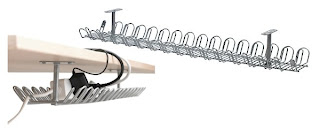 We should have looked at Ikea at the start. I'm going to buy two 70-cm lengths of their "Signum, Cable management, horizontal" cable baskets
and mount them underneath the desk, along the back.
We should have looked at Ikea at the start. I'm going to buy two 70-cm lengths of their "Signum, Cable management, horizontal" cable baskets
and mount them underneath the desk, along the back.
 http://recoilwinders.com/
Recoil is is a Kickstarter-financed startup company based in Park City, Utah. They have a line of spring-powered cable winders that may look a bit pricey ($10 each, for any of their products), but they are an innovative design that fills a basic need. These gadgets aren't for the desk; they're for the briefcase or gym bag.
And finally, Zagg:
 http://www.zagg.com/
Zagg sells both essentials and optional accessories for smartphones, iPods and tablets, and some laptop PC stuff besides. However, they add some style to their accessories - like what BlueLounge does, only different.
The only problem, I believe, is that most of the products that I've mentioned are made in China. I'm still trying to favor merchandise that is made in the USA, Canada, or Mexico - or Scandinavia, in Ikea's case. It's still not easy.
UPDATE: I found a cable tray that I like better than IKEA's Signum cable tray. You can read about it in my article, More Toys for your Toys.
Remember that my product recommendations are independent, honest, unsolicited and not for sale. I don't get compensated in any way for writing this. I just found some good stuff on my way to solving my own problem, and I thought it might help you as well. If you don't believe me, go read my post, Blogging for Dollars.
I've mentioned Zagg before, so I'll mention it again at the end. But here's some other cool stuff that I found.
 http://www.bluelounge.com/products/
BlueLounge has some imaginative solutions for cable management, smartphone and table tending, and some other cool stuff. I think it's rather attractively priced as well. My beloved spouse may disagree. I'm going to get their Cable Box.
http://www.ikea.com/us/en/catalog/categories/departments/workspaces/16195/
 We should have looked at Ikea at the start. I'm going to buy two 70-cm lengths of their "Signum, Cable management, horizontal" cable baskets
and mount them underneath the desk, along the back.
We should have looked at Ikea at the start. I'm going to buy two 70-cm lengths of their "Signum, Cable management, horizontal" cable baskets
and mount them underneath the desk, along the back.

Recoil is is a Kickstarter-financed startup company based in Park City, Utah. They have a line of spring-powered cable winders that may look a bit pricey ($10 each, for any of their products), but they are an innovative design that fills a basic need. These gadgets aren't for the desk; they're for the briefcase or gym bag.
And finally, Zagg:
Zagg sells both essentials and optional accessories for smartphones, iPods and tablets, and some laptop PC stuff besides. However, they add some style to their accessories - like what BlueLounge does, only different.
The only problem, I believe, is that most of the products that I've mentioned are made in China. I'm still trying to favor merchandise that is made in the USA, Canada, or Mexico - or Scandinavia, in Ikea's case. It's still not easy.
UPDATE: I found a cable tray that I like better than IKEA's Signum cable tray. You can read about it in my article, More Toys for your Toys.
Remember that my product recommendations are independent, honest, unsolicited and not for sale. I don't get compensated in any way for writing this. I just found some good stuff on my way to solving my own problem, and I thought it might help you as well. If you don't believe me, go read my post, Blogging for Dollars.
Thursday, January 10, 2013
Importing Your Contacts into a Google Nexus 7

Here are the steps:
- When you first started up your Nexus 7, you were required to set up a Gmail account. If you didn't do it then, just do it now. It's not that hard. And you don't have to use it; you only need to have it. You can set it up from any computer, by pointing your browser to http://www.gmail.com.
- Open your email program, or login to your browser-based email application. Go to Contacts or Address Book, and find a way to Export your contacts or address book as a CSV file. Most email programs can do this. (CSV stands for "Comma-separated values." If you open the file in Notepad to have a look at it, you will see that it's everything in your address book, separated by a bunch of commas.)
(Note for those who care: You can also export your contacts or address book as a VCF file, but the beauty of my procedure is that you don't need to. A CSV file works just fine.)
(Note for those who don't care: VCF stands for "Virtual Card File." I know; the "F" is redundant. Hey, I didn't invent it.) - Log into Gmail. Click on the "Gmail-downArrow" button and select "Contacts." In Contacts, click on the "More-downArrow" button, and choose "Import...". Click "Browse" to find and select the CSV file you just created in Step 2. Then click the "Import" button.
You don't need to use Gmail on your Nexus; you can keep using your regular account. All of those imported contacts are in the People app on your Nexus, and your email account automatically knows about all of them.
UPDATE, FRIDAY 9:30 A.M.: This method doesn't import those collections of addresses known variously as Groups, Distribution Lists, and Mailing Lists. Neither CSV files nor VCF files were designed to hold lists like that. If any of my readers knows how to import Distribution Lists, please comment on this post and enlighten us. Until then, I guess you'll just have to recreate them manually.
UPDATE, ABOUT A YEAR LATER: As emil pointed out in his comment, you need to make sure that the Google account in your Nexus 7's Settings menu is the same one you use in Step 3 to import the contacts.
Wednesday, December 19, 2012
On the Heroics of Schoolteachers
When I was a teacher, I (and many other teachers) determined that, if an armed intruder tried to get into my classroom, I would go Chuck Norris on him. I wouldn't do it to be heroic. Want to know why I would do it? First, my kids were that important to me (yes, every one of them) and I would do whatever I could to protect them. Second, as has been demonstrated from Columbine to Sandy Hook, the bad guy was probably gonna shoot at me anyway, so I had nothing to lose.
But all of the Sandy Hook teachers were heroes, both the ones who survived and the ones who died protecting their kids. They should be honored and rewarded the way heroes are honored and rewarded.
And I know I should call my kids "my students," but they were, and always will be, "my kids."
But all of the Sandy Hook teachers were heroes, both the ones who survived and the ones who died protecting their kids. They should be honored and rewarded the way heroes are honored and rewarded.
And I know I should call my kids "my students," but they were, and always will be, "my kids."
Monday, December 3, 2012
The fiscal cliff: a couple of ideas
Idea #1: Someone suggested that it would be very wise for the Republicans to acquiesce, and to accept Obama's (and the Democrats') proposal to raise taxes on the wealthiest Americans. Warren Buffett and other wealthy people have pooh-poohed the Republicans' contention that when wealthy people are taxed more, they invest less; therefore, raising the taxes on the rich will not have the net negative effect the Republicans are predicting.
But the better reason to raise the taxes on the wealthy is that, four years from now, when we're in worse shape than we are today, the Republicans can point at President Obama and the Democrats in Congress and say, "See? We TOLD you it wouldn't work! But NOOOOO, you wouldn't listen!" It would give them a lot a lot of leverage for unseating all of those Democrats.
Idea #2: This idea has been floating through Facebook and email lore, and it's a perfectly sensible idea. The idea is that we take away all of the special privileges that Congresscriters enjoy, and make them live the same way the rest of us live: the same tax laws, Social Security payments, Medicare/Medicaid payments, health plans, and everything else. They have forgotten how normal people live, and they need to be made to remember.
And here's a third idea, tangentially related to the fiscal cliff and the financial mismanagement that brought us to this point in the first place:
Idea #3: It was indeed Warren Buffett who proposed a constitutional amendment that says, in essence, whenever Congress cannot balance the budget for a given year, all of the members of Congress automatically become ineligible for re-election.
But the better reason to raise the taxes on the wealthy is that, four years from now, when we're in worse shape than we are today, the Republicans can point at President Obama and the Democrats in Congress and say, "See? We TOLD you it wouldn't work! But NOOOOO, you wouldn't listen!" It would give them a lot a lot of leverage for unseating all of those Democrats.
Idea #2: This idea has been floating through Facebook and email lore, and it's a perfectly sensible idea. The idea is that we take away all of the special privileges that Congresscriters enjoy, and make them live the same way the rest of us live: the same tax laws, Social Security payments, Medicare/Medicaid payments, health plans, and everything else. They have forgotten how normal people live, and they need to be made to remember.
And here's a third idea, tangentially related to the fiscal cliff and the financial mismanagement that brought us to this point in the first place:
Idea #3: It was indeed Warren Buffett who proposed a constitutional amendment that says, in essence, whenever Congress cannot balance the budget for a given year, all of the members of Congress automatically become ineligible for re-election.
Friday, November 30, 2012
Barack Obama is a Classy Guy
Like him or not, you have to admit that Barack Obama is a classy guy.
You may not like his politics, you may disagree with his philosophy, and you can even question his integrity if you want to. But you cannot deny that this president has class. I give you three undeniable examples.
Example #1: At the end of the inauguration ceremonies in 2009, the new president and his wife escorted the former president and his wife from the dais (where Mr. and Mrs. Bush had been honored guests), all the way through the capitol building, out the front door, down the front staircase, and to the steps of Marine One, the (new) president's own helicopter. Marine One would deliver the Bushes to Andrews AFB for their flight home aboard Air Force One, the (new) president's own airplane. Obama didn't have to do any of that. What is more, the Obamas escorted the Bushes alone, without any personal assistants, TV cameras or other hangers-on. Cameras were kept at a great distance - we wouldn't even know these details if it weren't for huge telephoto lenses on distant TV cameras. The four of them engaged in friendly (and private) conversation all along the way. The Obamas treated the Bushes with courtesy, kindness and the greatest respect. They parted at the steps of Marine One with smiles, sincere embraces and words of farewell. Then the president and his wife turned around, held hands, and walked back into the Capitol.
Example #2: In the midst of a bitter and hard-fought election campaign, the two contenders, Obama and Mitt Romney, took time out to attend and speak at the Albert E. Smith Memorial Foundation Dinner, a black-tie affair held on Thursday, October 18, 2012 in Washington, D.C. Laying the campaign aside for a while, both men poked fun at themselves and at each other. The jokes were in good taste and bore not even a hint of mean-spiritedness. At the end of their remarks, each candidate praised the other and made special mention of the other man's family and of his role as husband and father, which (to paraphrase their words) was more important than being president.
Example #3: Obama likes having lunch, or tipping a beer, with different people of varying degrees of fame. These lunches are always great publicity opportunities and are exploited as such by the president's handlers - except for last Wednesday, November 29th. After having won re-election, Obama invited Romney to lunch, and they dined at the White House on Wednesday. It was a VERY private affair. Besides Obama and Romney, the only other people in the room were the waiters - no photographers, no staff, no members of the press. The conversation was cordial, even friendly, and strictly confidential. The only details that we got on the lunch were part of the menu (turkey chili, chicken salad). Romney arrived and left as a friend, or at least as an esteemed colleague.
Class doesn't depend on intellectual or political superiority, or on wealth or heritage. Class is something that comes from inside of you, no matter what your station in life. For example, you know that story about the NYPD beat cop who, on the frigid night of November 14, went into a store and spent $100 on socks and boots for a homeless man, then knelt down on the sidewalk to help him put them on? That cop had class.
President Obama has class, too. Cynics will add their own details to these three stories, or put their own spin on them, but these are just three examples of an indisputable fact: President Obama is a classy guy.
You may not like his politics, you may disagree with his philosophy, and you can even question his integrity if you want to. But you cannot deny that this president has class. I give you three undeniable examples.
Example #1: At the end of the inauguration ceremonies in 2009, the new president and his wife escorted the former president and his wife from the dais (where Mr. and Mrs. Bush had been honored guests), all the way through the capitol building, out the front door, down the front staircase, and to the steps of Marine One, the (new) president's own helicopter. Marine One would deliver the Bushes to Andrews AFB for their flight home aboard Air Force One, the (new) president's own airplane. Obama didn't have to do any of that. What is more, the Obamas escorted the Bushes alone, without any personal assistants, TV cameras or other hangers-on. Cameras were kept at a great distance - we wouldn't even know these details if it weren't for huge telephoto lenses on distant TV cameras. The four of them engaged in friendly (and private) conversation all along the way. The Obamas treated the Bushes with courtesy, kindness and the greatest respect. They parted at the steps of Marine One with smiles, sincere embraces and words of farewell. Then the president and his wife turned around, held hands, and walked back into the Capitol.
Example #2: In the midst of a bitter and hard-fought election campaign, the two contenders, Obama and Mitt Romney, took time out to attend and speak at the Albert E. Smith Memorial Foundation Dinner, a black-tie affair held on Thursday, October 18, 2012 in Washington, D.C. Laying the campaign aside for a while, both men poked fun at themselves and at each other. The jokes were in good taste and bore not even a hint of mean-spiritedness. At the end of their remarks, each candidate praised the other and made special mention of the other man's family and of his role as husband and father, which (to paraphrase their words) was more important than being president.
Example #3: Obama likes having lunch, or tipping a beer, with different people of varying degrees of fame. These lunches are always great publicity opportunities and are exploited as such by the president's handlers - except for last Wednesday, November 29th. After having won re-election, Obama invited Romney to lunch, and they dined at the White House on Wednesday. It was a VERY private affair. Besides Obama and Romney, the only other people in the room were the waiters - no photographers, no staff, no members of the press. The conversation was cordial, even friendly, and strictly confidential. The only details that we got on the lunch were part of the menu (turkey chili, chicken salad). Romney arrived and left as a friend, or at least as an esteemed colleague.
Class doesn't depend on intellectual or political superiority, or on wealth or heritage. Class is something that comes from inside of you, no matter what your station in life. For example, you know that story about the NYPD beat cop who, on the frigid night of November 14, went into a store and spent $100 on socks and boots for a homeless man, then knelt down on the sidewalk to help him put them on? That cop had class.
President Obama has class, too. Cynics will add their own details to these three stories, or put their own spin on them, but these are just three examples of an indisputable fact: President Obama is a classy guy.
Wednesday, November 28, 2012
I didn't vote for Grover Norquist
Here's a great illustration of why we should despise, and even get rid of, the unelected powermongers who prowl the streets of Washington, New York City, London, and other seats of power in the world.
Grover Norquist is the president of an organization called "Americans for Tax Reform." Twenty years ago, he started pushing newly elected Republican Congressmen (and women), or those who were running for election, to sign a pledge that they would never vote to raise taxes.
After 20 years of fiscal irresponsibility on the part of both the executive and legislative branches of the federal government, our country finds itself in a difficult financial position. We need to implement our own "austerity measures" before they are dictated to us by someone else — like international banks and foreign governments. We are facing a fiscal crisis which can be resolved in several ways, most of them painful. One of the least painful ways is a combination of spending cuts and tax increases.
I didin't say it was "painless." I said it was "one of the least painful." Don't be stupid.
You will recall that, on August 2, 2011, the U.S. Congress set up a bipartisan "supercommittee" that was supposed to break through the Congressional gridlock and come up with a solution to this fiscal problem while there was still time to act. As an incentive to getting things done, Congress wrote a Plan B into the legislation, a bitter pill that the nation would have to swallow on January 2, 2013 if the supercommittee failed in their mission. This was no secret to anybody — nor was the timing of Plan B, two convenient months after a critical national election. Congress as a whole may be a pack of idiots, but they're clever idiots.
At any rate, the supercommittee proved to be as fractious and stubborn as the body which had created it, and they hit their deadline without completing their mission. So Plan B kicked in, and the automatic spending cuts and other measures that it specified will also kick in, on January 2, 2013. These automatic measures, if activated, will severely impact the still-fragile economy and could drive the country back into a recession. Some wag coined the term "fiscal cliff" to describe the country's situation, and now everybody is saying it. I'm so sick of hearing the term that I get the urge to chew my leg off every time someone says it.
Now that the election is over, the executive and legislative branches are scrambling to find a way to deactivate this time bomb before it goes off. As I said earlier, one solution involves raising taxes.
Enter Grover Norquist.
In general, Democrats have always been eager to raise taxes, and Republicans have been just as eager to cut taxes, or at least not to raise them. For the most part, every tax vote that has come up in Congress for the past 20 or so years has gone right down party lines. Now, for the sake of the country, some Republicans are warming up to the idea of raising taxes on some people. This includes some powerful Congressmen who signed Norquist's pledge 20 years ago, such as John McCain, R-Ariz, and Lindsay Graham, R-N.C.
Now, Norquist is holding their feet to the fire, insisting that the pledge lasts forever and that they can't back away from it just because it's no longer practical or convenient. He compares the power of the pledge to the power of a mortgage or a marriage vow. (It's ludicrous that he should pick these two analogies, when homeowners are walking away from underwater mortgages and the ratio of divorces to marriages in this country exceeds 50%.) But a pledge not to raise taxes is not as sacred as a marriage vow, nor as legally binding as a mortgage commitment. And it ignores the fact that, in politics, practicality has to win out over ideology. We've had four years — actually, we've had 20 years, but the last four years are a representative sample — of a Congress ruled by ideologues, and you can see what a mess it has gotten us into.
Norquist has been in the news a lot this week, sounding like someone who's in charge of Congress. He is attempting to enforce his will through threats, blackmail, and innuendo. His tax pledge is an ideology that has blinded him to the current reality. He cannot see past the tax pledge, to what is really important for the country. He is no better than the members of the supercommittee, who couldn't see past their own positions and party platforms to work out a compromise and act in the country's collective best interests. Actually, he's worse than they were, because we didn't elect him.
Our Congresspeople should be accountable to us, the voters, not to some unelected lobbyist or to the president of a lobbying organization like Americans for Tax Reform. I didn't vote for Grover Norquist. I don't want him running the country. To grant him any measure of power in Washington is just plain wrong. We as Americans should stand up and, in one loud voice, tell Grover Norquist to "SHUT UP!"
UPDATE:
John Cassidy, of the New Yorker, apparently beat me to the punch, publishing this analysis of Norquist two days ago.
POSTSCRIPT:
While we're at it, here are some other people who should shut up and keep their power-hungry paws and their fat, padded asses out of the halls of power in Washington, D.C.:
And here are some people that we should see and hear more of in Washington. Somehow, these people come across as wise, as speaking up in behalf of the American people instead of themselves. Both the legislative and executive branches would do well to heed their advice.
POST-POSTSCRIPT:
Some of those paws are money-grubbing paws, not power-hungry paws. But the first rule of power is "Power follows money," so in my mind there's not a lot of difference between them.
Grover Norquist is the president of an organization called "Americans for Tax Reform." Twenty years ago, he started pushing newly elected Republican Congressmen (and women), or those who were running for election, to sign a pledge that they would never vote to raise taxes.
After 20 years of fiscal irresponsibility on the part of both the executive and legislative branches of the federal government, our country finds itself in a difficult financial position. We need to implement our own "austerity measures" before they are dictated to us by someone else — like international banks and foreign governments. We are facing a fiscal crisis which can be resolved in several ways, most of them painful. One of the least painful ways is a combination of spending cuts and tax increases.
I didin't say it was "painless." I said it was "one of the least painful." Don't be stupid.
You will recall that, on August 2, 2011, the U.S. Congress set up a bipartisan "supercommittee" that was supposed to break through the Congressional gridlock and come up with a solution to this fiscal problem while there was still time to act. As an incentive to getting things done, Congress wrote a Plan B into the legislation, a bitter pill that the nation would have to swallow on January 2, 2013 if the supercommittee failed in their mission. This was no secret to anybody — nor was the timing of Plan B, two convenient months after a critical national election. Congress as a whole may be a pack of idiots, but they're clever idiots.
At any rate, the supercommittee proved to be as fractious and stubborn as the body which had created it, and they hit their deadline without completing their mission. So Plan B kicked in, and the automatic spending cuts and other measures that it specified will also kick in, on January 2, 2013. These automatic measures, if activated, will severely impact the still-fragile economy and could drive the country back into a recession. Some wag coined the term "fiscal cliff" to describe the country's situation, and now everybody is saying it. I'm so sick of hearing the term that I get the urge to chew my leg off every time someone says it.
Now that the election is over, the executive and legislative branches are scrambling to find a way to deactivate this time bomb before it goes off. As I said earlier, one solution involves raising taxes.
Enter Grover Norquist.
In general, Democrats have always been eager to raise taxes, and Republicans have been just as eager to cut taxes, or at least not to raise them. For the most part, every tax vote that has come up in Congress for the past 20 or so years has gone right down party lines. Now, for the sake of the country, some Republicans are warming up to the idea of raising taxes on some people. This includes some powerful Congressmen who signed Norquist's pledge 20 years ago, such as John McCain, R-Ariz, and Lindsay Graham, R-N.C.
Now, Norquist is holding their feet to the fire, insisting that the pledge lasts forever and that they can't back away from it just because it's no longer practical or convenient. He compares the power of the pledge to the power of a mortgage or a marriage vow. (It's ludicrous that he should pick these two analogies, when homeowners are walking away from underwater mortgages and the ratio of divorces to marriages in this country exceeds 50%.) But a pledge not to raise taxes is not as sacred as a marriage vow, nor as legally binding as a mortgage commitment. And it ignores the fact that, in politics, practicality has to win out over ideology. We've had four years — actually, we've had 20 years, but the last four years are a representative sample — of a Congress ruled by ideologues, and you can see what a mess it has gotten us into.
Norquist has been in the news a lot this week, sounding like someone who's in charge of Congress. He is attempting to enforce his will through threats, blackmail, and innuendo. His tax pledge is an ideology that has blinded him to the current reality. He cannot see past the tax pledge, to what is really important for the country. He is no better than the members of the supercommittee, who couldn't see past their own positions and party platforms to work out a compromise and act in the country's collective best interests. Actually, he's worse than they were, because we didn't elect him.
Our Congresspeople should be accountable to us, the voters, not to some unelected lobbyist or to the president of a lobbying organization like Americans for Tax Reform. I didn't vote for Grover Norquist. I don't want him running the country. To grant him any measure of power in Washington is just plain wrong. We as Americans should stand up and, in one loud voice, tell Grover Norquist to "SHUT UP!"
UPDATE:
John Cassidy, of the New Yorker, apparently beat me to the punch, publishing this analysis of Norquist two days ago.
POSTSCRIPT:
While we're at it, here are some other people who should shut up and keep their power-hungry paws and their fat, padded asses out of the halls of power in Washington, D.C.:
- Donald Trump
- Jesse Jackson and Al Sharpton
- Bank presidents, bank lawyers, banking organizations, and lobbyists acting on behalf of banks
- Uh, the same thing, this time substituting "auto company" for "bank" and "banking"
- The same thing again, this time substituting "insurance company"
- The same thing again, this time substituting "investment firm" or "finance company"
- Any special-interest group representing a privileged minority of Americans
- Actors, musicians, sports superstars and anyone else trying to parlay their fame into power - unless they run for office and get elected
And here are some people that we should see and hear more of in Washington. Somehow, these people come across as wise, as speaking up in behalf of the American people instead of themselves. Both the legislative and executive branches would do well to heed their advice.
- Warren Buffett
- Mitt Romney, the private citizen
- Meg Whitman
- Wow, this is a frightfully short list!
POST-POSTSCRIPT:
Some of those paws are money-grubbing paws, not power-hungry paws. But the first rule of power is "Power follows money," so in my mind there's not a lot of difference between them.
Subscribe to:
Posts (Atom)
